When Chests Rain Tons of Loot Skill Tree Strategy
Spend every burst’s gold on nodes that make the next land obviously richer.
The skill tree is the long game in When Chests Rain Tons of Loot. Field play fills the chest; the tree turns that gold into permanent power — more heroes, harder landings, more arrows, more gold, better loot, longer runs, card slots, war-band systems, and surprise event unlocks. This guide explains how to read glowing nodes, what to buy early, how hero unlocks fit the branches, and when to pivot into cards and forge gates. Brush up on the loop in Getting Started if needed.
How the tree works
Between runs you spend banked gold on skills. Glowing nodes are ready to buy — click one you can afford. Each purchase strengthens future runs. Some nodes sit behind others; some unlock entirely new tabs or systems (card album sleeves, extra card slots, war band, wild events). A few powerful options are earned through trials, not only purchased — when the game offers a trial unlock, complete it instead of ignoring the prompt.
Official messaging highlights the fantasy clearly: more heroes, harder landings, more arrows, more gold, and better loot. In practice you will also see quality-of-life and tempo nodes (longer runs, event chances, automation helpers for classes like the Barbarian). Treat the tree as an economy engine, not a completion checklist.
Early game priority (first glowing buys)
Your first coins are scarce. Favor nodes that raise clear speed and gold per kill before luxury:
- Damage quality — sharp tips style upgrades and similar arrow/attack improvements.
- Hard landing — heroes stomp slimes on drop, turning placement into burst damage (pairs with good Controls).
- Loot / kill gold — percentage bumps to what slimes pay; compounding matters immediately.
- Hero count / hand — more bodies cover more of each new land.
- Only then longer runs — extra time is wasted if you cannot fill the chest in the minutes you already have.
If three nodes glow and you can only afford one, pick the one that either unlocks a new hero path or multiplies gold. Flat cosmetic-adjacent branches can wait.
Mid tree: heroes, events, and cards
As levels open (boss clears help unlock deeper layers), spend toward:
- Barbarian and other class unlocks when the gold gate is fair. Barbarian war cries and slime tosses multiply your existing Archers and Thunder Mages instead of replacing them.
- Wild event / surprise map event nodes that add Slime Rain-style chaos every run — denser fields mean denser loot if your camera keeps up.
- Card album and card slots — cards slot for bonuses (crit, boss damage, drop rate flavours, and similar). Extra sleeves and slots often require dedicated tree purchases; without slots, album progress sits idle.
- Trial-gated ultimates or smart skills — complete the trial, then enjoy automation or burst tools that free attention for hovering.
Card strategy should match your squad. A boss-damage card is weak if you never challenge lairs; a loot card shines when you already hover cleanly. Cross-check heroes on Players and relative value on the Tier List.
Late unlocks: war band and forge pressure
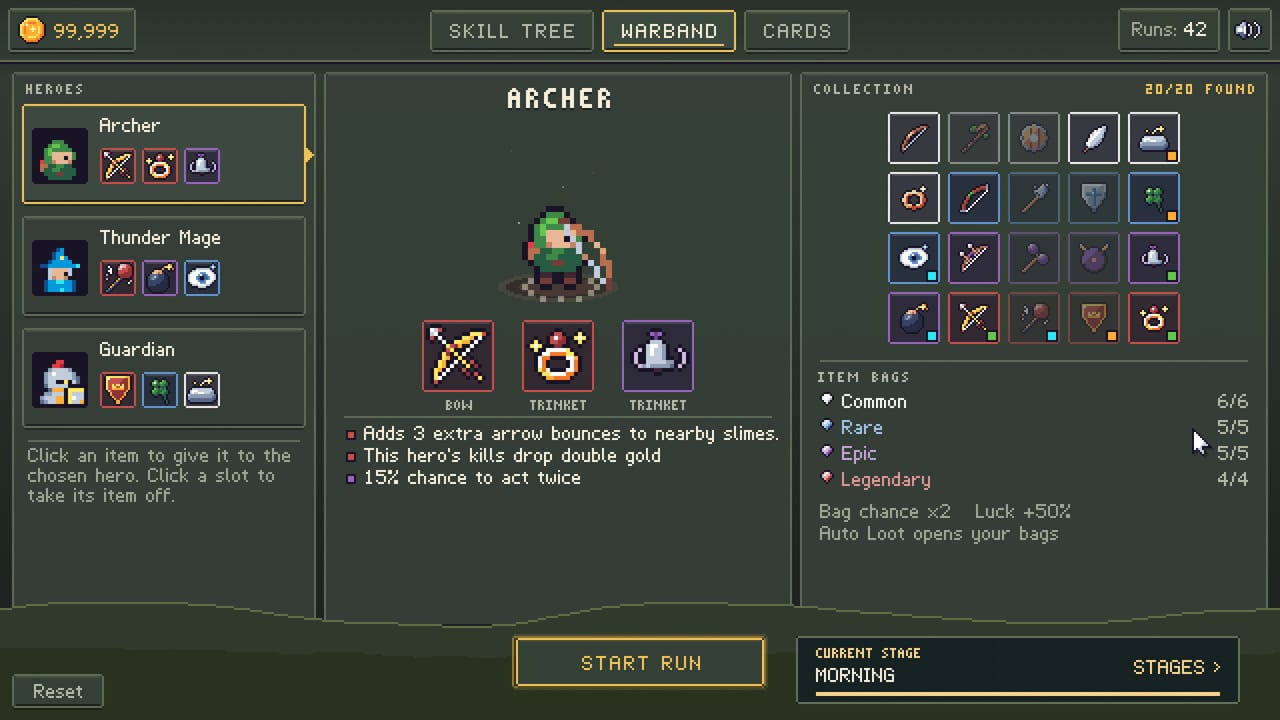
Deeper progression opens the war band: every hero gains a class item slot and a trinket slot. Slimes start dropping item bags. The forge refines items with gold — higher refine aims higher power with higher risk. Tree nodes that unlock or improve these systems change your gold budget: suddenly not every coin should hit a damage node because refine attempts and slot unlocks compete.
Practical rule: keep enough gold reserved for one meaningful refine or a slot unlock after a strong Diamond-tier burst, but do not starve clear-speed nodes so badly that lands stop paying. Forge habits and risk management belong with Forge and Gear; the tree’s job is gating access and feeding the economy that makes forge attempts sane.
Spending frameworks that stay honest
Throughput first. Ask: does this node make the next chest fill faster or richer? If neither, delay it.
Unlock spikes. Hero unlocks, card slots, and war-band access are spikes — save for them when you are one purchase away instead of nibbling three tiny damage nodes.
Tempo match. Longer-run nodes belong with high clear speed and strong event handling. If Golden Slimes still escape you (see Loot and Chest), fix controls and chase skills before buying more minutes.
Boss gates. Some layers open after bosses such as Queen Gloop. If the game tells you to upgrade before challenging, believe it — dump gold into glowing damage and hero nodes, then return to the lair. Land strategy: Bosses and Lands.
Secret / assist nodes. Public gameplay calls out burst-grab helpers (cursor on the bursting chest scooping the rain) as intentional features once unlocked. These are high value because they protect the gold you already earned.
Example purchase arcs (flexible, not a build code)
Arc A — New save: sharp tips / hard landing → kill gold → extra hero capacity → first boss prep → Barbarian when affordable → card sleeve → wild event.
Arc B — Stuck on gold: loot value chain → event density → burst assist → only then specialty damage.
Arc C — Boss focused: hero damage and count → boss-oriented cards/slots → challenge lair → spend boss payout on the next layer unlock.
Arc D — Gear focused: unlock war band → bag drop support if present → reserve gold for forge tries → return to clear speed if refine variance hurts.
Reroll your arc when a new system appears. The tree is wide on purpose; stubbornly finishing one branch while a glowing card slot sits ignored is how runs feel flat.
Common mistakes
- Buying longer runs before you can saturate the current timer with loot.
- Ignoring trial unlocks because they are not glowing purchase nodes.
- Maxing one hero branch while hand size stays tiny.
- Opening forge risk without burst-assist or loot-value support.
- Challenging bosses underfunded, dying, and spending the recovery gold on random nodes instead of the warned upgrades.
Measuring whether a buy was correct
After each purchase, play one focused land. Compare: chest mark reached, gold after rain, whether a Golden Slime died in time, and whether the boss timer felt fair. If nothing improved, the node was a vanity pick for your current bottleneck — note it and pivot next time.
The skill tree rewards deliberate greed. Bank cleaner bursts with better Controls, spend on throughput and unlock spikes, and let every node advertise itself on the next map’s rain of loot.
Frequently Asked Questions
Quick answers to the most common questions.
What do glowing skills mean?
Glowing nodes are affordable and ready to buy. Click one to spend gold and strengthen every future run.
Should I buy longer runs early?
Only after clear speed and loot value can fill the time you already have. Extra minutes with an empty chest waste the node.
How do card slots unlock?
Progress the tree into card album / sleeve nodes. Extra slots are often separate purchases — buy them when cards are piling up unused.
Are all skills purchased with gold?
No. Some are earned by completing trials or other unlock conditions. Watch for those prompts.
When should I invest in the forge path?
After war band unlocks and you have spare gold beyond core clear-speed nodes. Higher refine means higher risk, so keep a throughput baseline.